
The current version of the Tecniplast website doesn't match your region. Please visit your local website to find information and offerings specific to your country.
The current version of the Tecniplast website doesn't match your region. Please visit your local website to find information and offerings specific to your country.


In modern laboratory animal science, automation is essential for streamlining cage processing while ensuring absolute biosecurity. By replacing manual tasks with standardized technology, facilities achieve superior process reliability, significant resource savings, and critical protection for personnel against ergonomic strain and Laboratory Animal Allergies (LAA). Today, our automated solutions provide the high-throughput efficiency and operational stability that leading research institutions require across all continents.
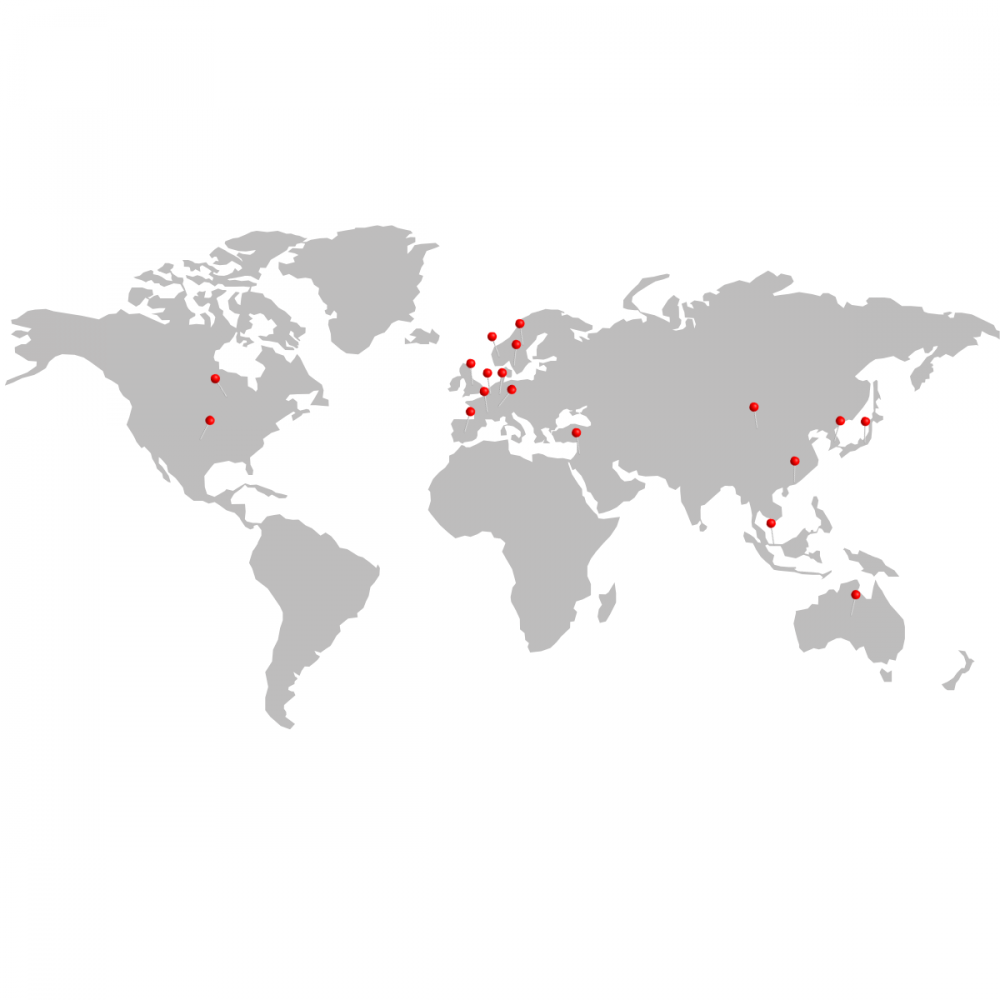
With a total of 156 systems installed worldwide, our technology is now a fundamental part of the research infrastructure in dozens of countries. Looking at the geographical distribution, the United States and Sweden emerge as the primary leaders in adopting our automation solutions. In the USA, we count 24 systems, with a strong preference for the Pegasus (9 units) and Ares (5 units) solutions, highlighting a market focused on high-volume partial cage processing. Sweden follows as a key innovator with 24 total installations; here, the landscape is uniquely characterized by the Poseidon system, which accounts for 13 units, making it the national benchmark for automated bottle processing.
The reach of our automation continues through the United Kingdom, which hosts 18 systems, showing a 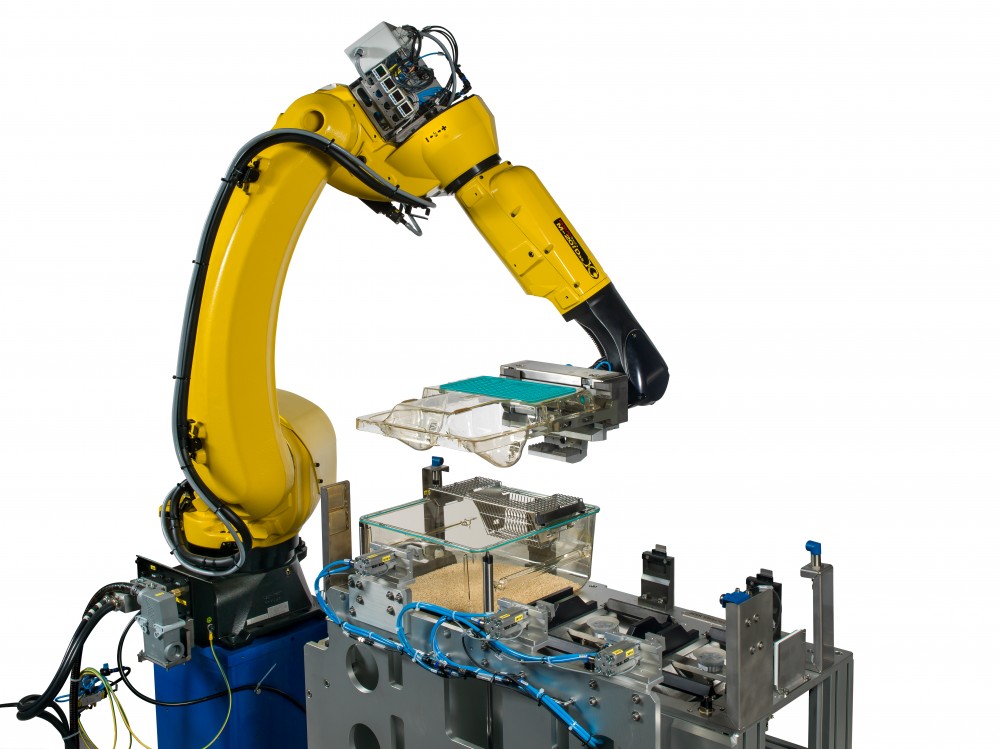 balanced adoption of Apollo (6 units) for full cage change and Pegasus (5 units) for the partial cage change. In China, the focus is highly specialized, with almost all of its 10 installations dedicated to the Pegasus tunnel washer automation, proving its role as the gold standard for large-scale, high-throughput Asian facilities. Other significant presences include France and Germany, where a mix of Ares and Pegasus systems supports a robust and growing biomedical research sector.
This widespread distribution highlights our ability to adapt to different regional research requirements, from the high-capacity demands of North American vivariums to the specialized bottle-processing standards of Scandinavian facilities. Every unit installed represents our commitment to improving safety, operational throughput, and sustainability in the global scientific community. These 156 systems serve as a testament to the trust that leading research institutes place in our expertise as we continue to expand our global footprint.




 Corporate
 Italia
 Australia/New Zealand
 France
 Germany
 Japan
Japan USA
USA Canada
 UK
UK China
China Switzerland