
The current version of the Tecniplast website doesn't match your region. Please visit your local website to find information and offerings specific to your country.
The current version of the Tecniplast website doesn't match your region. Please visit your local website to find information and offerings specific to your country.


Every new product takes shape not only thanks to a solid technical design, but also through a production system capable of making it concrete, repeatable, and scalable. In this article, we share how the assembly line for Zephyr new ventilation unit was designed: a process led by the industrialization team, which transformed operational requirements into a structured and efficient workflow.
 We start with a blank sheet of paper. The only fixed point is the takt time, the pace that production must maintain to meet demand. This allows to size the line in terms of time and resources. In addition to this objective, there is also the need to maximize efficiency, optimize costs and quality and improve ergonomics. From there, the production flow is built step by step.
The team led the entire project, beginning with an in-depth analysis of the product to propose improvements aimed at producibility and efficiency. We defined the work phases and timelines, designed the layout, structured the operating stations and organized the logistics flow of materials. At the same time, supplier involvement was coordinated to ensure consistency between design, procurement, and implementation. The goal was to create a solid and balanced production system capable of sustaining ongoing production.
The line consists of three stations, each assigned to a dedicated operator working independently on their module. Structurally, it features an integrated rail system with liftable and rotating platforms, designed to support the structure during work phases, allow access to all sides of the machine and provide optimal ergonomic conditions for the operators.
 The line follows what is known in the industry as One Piece Flow: each station contributes to producing one machine at a time in sequence. This approach minimizes errors and reduces throughput times, ensuring a linear, consistent and controlled workflow.
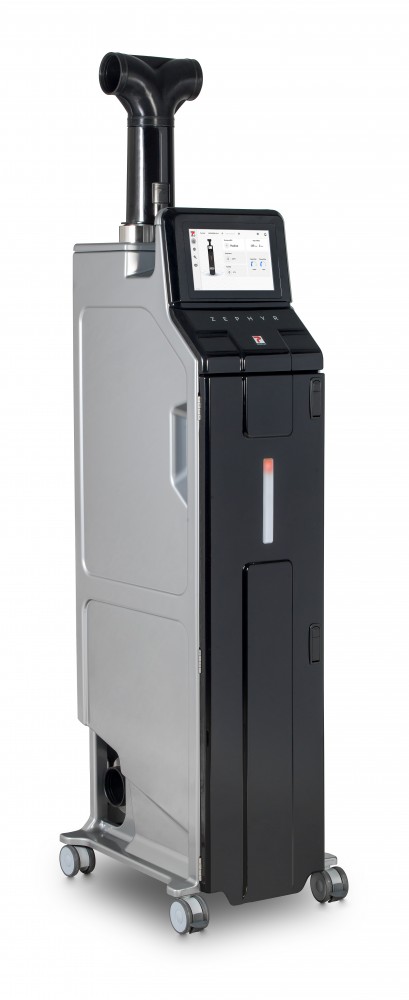
Materials arrive from the warehouse via trolleys, organized to cover the entire daily production. Small parts are arranged on gravity shelves located at the workstations. This system allows operators to focus on value-added tasks.
The line consists of three main stages: assembly, testing, and packaging. For now, these stages are separate, but improvement is continuous: you never stop perfecting a line. The next step will be the integration of testing process directly into the line, but this is a chapter that we will explore in the future.
This assembly line is more than a production site. It reflects our approach where expertise, collaboration and industrial know-how turn every project into a real tangible product day after day.




 Corporate
 Italia
 Australia/New Zealand
 France
 Germany
 Japan
Japan USA
USA Canada
 UK
UK China
China Switzerland