
The current version of the Tecniplast website doesn't match your region. Please visit your local website to find information and offerings specific to your country.
The current version of the Tecniplast website doesn't match your region. Please visit your local website to find information and offerings specific to your country.


Janvier Labs is a key player within the biomedical ecosystem. In a context where scientific, regulatory, and ethical requirements continue to intensify, the company has become a leading global provider of rodent models for research. As a long‑standing division of the Janvier Group (comprising 12 companies) it has refined and structured its production over the past 65 years by combining scientific expertise, industrial rigor, and strong innovation capabilities.
Its core activity includes the breeding and production of rodent models, alongside the development of specialized lines that support a wide range of research needs. This portfolio is complemented by a variety of high value‑added services. Janvier Labs assists clients throughout the lifecycle of their strains, offering support in areas such as reproductive sciences, rederivation, cryopreservation, and long‑term storage. The company also provides tailored breeding solutions, allowing clients to rely on Janvier Labs for the management and propagation of their own strains, including those requiring particular attention, to ensure continuity for their research programs.


In addition, its laboratory activity complements this global offering with the production and management of biological products.
Furthermore, Janvier Labs has developed its Facility Management offering, which consists of providing specialized personnel directly within clients’ animal facilities, addressing the growing human resource challenges in the field of laboratory animal science.
In this context, we met Pierre DILLARD, Deputy CEO, who also oversees scientific and commercial activities, and Anthony CLOUARD, Industrial Director, who leads Wild Type production and manages maintenance, capital projects, internal logistics flows, and transport services.
Within this ecosystem, Janvier Labs’ role goes far beyond that of a supplier. “We provide highly controlled models to researchers in order to limit experimental variables and ensure reproducibility of results,” explain the teams.
One of Janvier Labs’ most distinctive characteristics is the highly structured and carefully controlled organization of its production workflows, particularly when integrating new strains.
For health and quality‑assurance reasons, new material does not enter the production site directly. Initial steps are carried out at the LESR (External Laboratory for Reproductive Sciences, located at the historical site), where material is processed and verified before being transferred to the internal laboratory (LISR). There, it is introduced into prepared recipient females to initiate the development process.
The earliest developmental phases take place in dedicated, custom‑designed “macro units” (approximately thirty units of 40 to 100 cages), which ensure full physical separation between projects and maintain strict health oversight during the initial weeks following transfer.


These structures, made of pressurized plastic enclosures, function as isolators. Technicians access them from below and work using integrated suit systems..
After 12 weeks, animals are transferred to development units (UD), where breeding male populations are gradually increased over several generations before moving into production units (UP).


This progressive process allows control at each stage while ensuring secure scale-up, illustrating Janvier Labs’ ability to combine scientific rigor with industrial logic.
With more than 22,000 m² of infrastructure, including an 11,000 m² extension completed in 2015, Janvier Labs now operates a true industrial facility designed to meet production requirements while ensuring high sanitary safety and serving as a showcase for clients.
The site organization is based on a fundamental principle: strict separation of flows and environments. Production units (around 30 housing rooms), development units, and infrastructure dedicated to reproductive sciences (LESR and LISR) structure the activities.
Each area is designed as an autonomous entity, with its own sanitary constraints and access protocols. All are connected by central infrastructures, especially the washing facility, ensuring operational continuity while maintaining high control levels.
NB: Entering a development unit requires approximately 45 minutes of preparation for untrained personnel, including showering, changing rooms, and passing through five airlocks.
To facilitate movement of equipment and animals, custom-designed transfer stations with sliding window systems were
This organization not only secures processes but also enables the handling of large volumes while maintaining a high degree of flexibility.
The 11,000 m² expansion of the new plant completed in 2015 not only ensured compliance with European directive requirements, but also anticipated the increase in capacity needed to support the company’s growth (production capacity was doubled).
This project reflects a dual objective: to enhance industrial performance and increase production capacity, while modernizing the production infrastructure to align with current and future industry standards
.

Beyond capacity, the new facility significantly improves working conditions by reducing work at height, automating tasks, and implementing automatic watering systems, thereby limiting physical strain and musculoskeletal disorders. This aligns with a broader CSR approach focused on improving working conditions.
Automation is a key performance lever. At the core of the site, a large centralized washing facility operates as a true operational hub, integrating conveyors, robots, and washing tunnels.
 Following a
Some figures:
Beyond performance, this automation also addresses a human factor. “We aimed to reduce task difficulties and improve working conditions for our teams, particularly by limiting repetitive handling and work at height,” explains Anthony.
This approach helps refocus staff on higher value-added activities in laboratory animal science, while also improving jobs’ ergonomics.
Housing conditions play a critical role in the quality of the models. Janvier Labs adapts its solutions based on scientific needs and sanitary constraints.
The company combines different housing types, including open cages and ventilated systems, particularly for sensitive models. These choices are based on criteria such as animal health status, cage capacity, and project-specific requirements.
Work practices also vary depending on the environment, with distinct organizations between open cage areas (Duplex 330, 960, 1500; conventional Tecniplast cages) and ventilated cage areas (EM500 and GM985; Tecniplast IVC cages, requiring work under laminar flow hoods). This adaptation ensures both operational efficiency and compliance with animal welfare standards.


Cage IVC EM500 3D plan cage IVC GM985 GM985 Rack
In such a demanding environment, partner quality is crucial. Janvier Labs relies on a long-term collaboration with Tecniplast, built on understanding operational constraints and adapting to field needs.
Over the course of various projects, several pieces of equipment have been adapted or developed to meet site-specific requirements, incorporating team feedback and evolving practices. As a result, multiple systems have undergone development or adjustment, including high-capacity cages, ventilation units, and specific components designed to optimize ergonomics and day-to-day usability. This approach (more flexible than standard market offerings) effectively supports increasingly demanding performance and quality requirements.
“The ability to adapt and evolve solutions according to our needs is essential in our activity. Tecniplast has demonstrated real open-mindedness,” note Pierre & Anthony.
This collaboration also results in an optimized maintenance organization, improving responsiveness in an environment where each intervention can have a direct impact on sanitary conditions.
 NB:
NB:
To complete the production flow cycle, Janvier Labs also stands out through its control of the entire value chain, including the transport of its animals. Thanks to an in-house fleet and teams trained in animal welfare, the company ensures service continuity and strict compliance with transport conditions for the several thousand animals shipped each week.
This approach enables full traceability and maintains quality standards through to final delivery.
Janvier Labs uses CSR (Corporate Social Responsibility) as a strategic lever for developing its industrial operations. In response to growing sector expectations, the company has chosen to sustainably integrate environmental and social considerations into the core of its production, which are now essential to meet the expectations of research stakeholders.
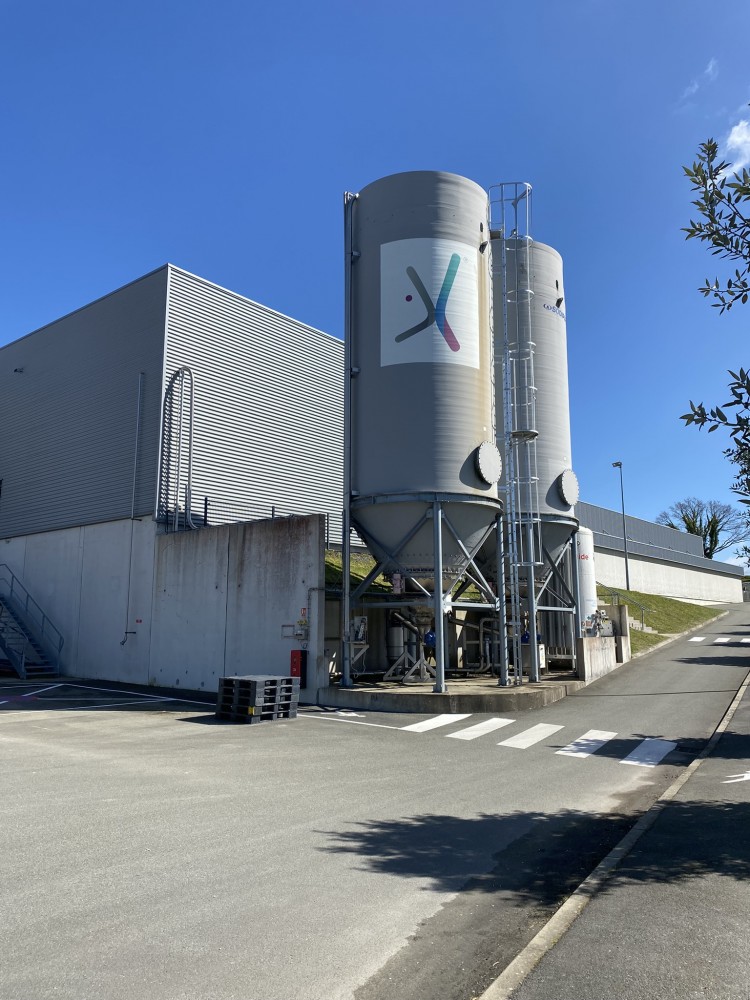
From an environmental standpoint, significant investments have been made to optimize the site’s energy performance and reduce its carbon footprint. This includes the implementation of heat recovery systems on ventilation installations, improvements in cooling production equipment, and a transition toward lower-carbon energy sources. Water management is also a key focus, with the creation in 2021 of an internal wastewater pre-treatment plant designed to treat and control discharges into the public network.
As part of sector-specific initiatives, euthanized animals that are not genetically modified are frozen and resold as feed for zoo reptiles.
This approach is accompanied by a strong commitment to employees. Infrastructure and processes have been designed to concretely improve working conditions, notably through the automation of certain tasks and the optimization of workstations.
In a context of rapidly evolving scientific needs and regulatory constraints, Janvier Labs relies on active monitoring and close ties with the scientific community to anticipate biomedical trends.
The development of increasingly complex models, particularly immunodeficient and humanized ones, is a key transformation axis. At the same time, the company must adapt to shorter innovation cycles and a constantly evolving economic and geopolitical environment.
Through its investments, organizational structure, and commitments, Janvier Labs sets out a clear ambition: to continue making its models evolving and to develop increasingly sophisticated models (genetically humanized or injected with human stem cells), as well as its infrastructure, in order to meet the growing demands of research and its own genetic and sanitary challenges.
“What we are most proud of is having built a system capable of guaranteeing, over time, the quality and reproducibility of the models we provide.”
A vision that firmly positions Janvier Labs as a leading partner for the scientific community.
Janvier Labs operates within a particularly stringent regulatory framework at both European and national levels. In Europe, Directive 2010/63/EU strictly regulates the use of animals for scientific purposes, defining conditions for breeding, experimentation, and animal welfare. In France, this framework is reinforced by dual oversight from the Ministries of Research and Agriculture, with regular inspections carried out by state veterinary services (DDETSPP), auditing facilities once or twice per year.
In addition to this regulatory base, a
“Veterinarians are the backbone of these systems,” emphasizes Pierre.
A
The
One of the main challenges in this field lies in the natural variability that can emerge over time. As with any living population, gradual changes may occur across generations, a phenomenon that is particularly relevant in inbred lines. Given that a mouse generation renews roughly every six months (compared to several decades in humans) these dynamics require careful and continuous oversight.
“Thus, 10 years for a mouse represent centuries for the human species. We must therefore ensure that the B6 strain, for example, that we produce today is identical to yesterday’s and tomorrow’s,” specifies Pierre Dillard, Scientific Director.
Finally, a
Together, these measures form a comprehensive and robust control system that enables Janvier Labs to guarantee reliable, reproducible models that meet the most stringent expectations of the scientific community.
- Edited by Camille Portron




 Corporate
 Italia
 Australia/New Zealand
 France
 Germany
 Japan
Japan USA
USA Canada
 UK
UK China
China Switzerland