
The current version of the Tecniplast website doesn't match your region. Please visit your local website to find information and offerings specific to your country.
The current version of the Tecniplast website doesn't match your region. Please visit your local website to find information and offerings specific to your country.


How a leading academic research institute in Switzerland and Tecniplast reimagined bottle processing with the Poseidon system, successfully integrated it into an existing facility that remained operational throughout the entire project, and at the same time created tangible benefits for employees
In 2026, the research facility completed a major modernization of its bottle processing area. The P-Line bottle washing system, which had been in operation for 13 years, was replaced with a new fully automated Poseidon system. This project not only introduced robotics into bottle processing but also created an opportunity and objective to rethink and optimize the entire workflow.
With approximately 1’500 bottles and 84 bottle crates processed every day, the system plays a critical role in the facility’s daily operations.
To ensure continuous operation during the transition, the filling table of the existing P-Line was converted into a stand-alone unit and remained in use throughout the installation period, allowing bottle filling to continue while the new system was being installed. In addition, a large reserve of pre-filled bottles was prepared in advance to provide additional operational security during the transition.
The Challenge: Modernization During Ongoing Operations
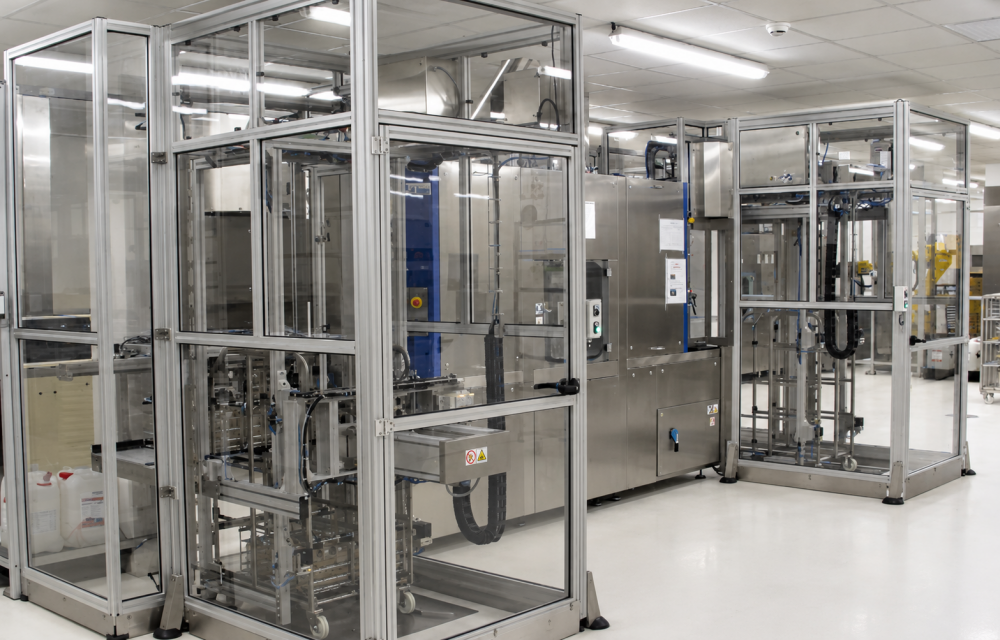 One of the greatest challenges was planning the replacement of the existing system within a fully utilized facility while ensuring that operations could continue throughout the project.
Before the start of the project, several layout concepts were developed, evaluated, and discussed in close collaboration between the research facility and Tecniplast. The goal was to maximize the use of available space and preserve flexibility for future development, while working within the constraints of existing utility connections and technical interfaces that had to be adapted for the new system.
Delivery and installation presented an additional challenge, as the limited ceiling height required creative on-site solutions and close coordination between the facility and Tecniplast.
As is often the case in refurbishment projects, unforeseen challenges emerged during implementation. Existing site conditions required additional modifications that could not have been fully anticipated during the planning stage. These included adjustments to existing installations as well as on-site welding and modification work that had to be coordinated and completed at short notice. Thanks to the flexibility and intense communication between the responsible people at the research facility and Tecniplast Suisse, the required work could be carried out safely and reliably while the facility remained fully operational.
 Creating Value Through Automation
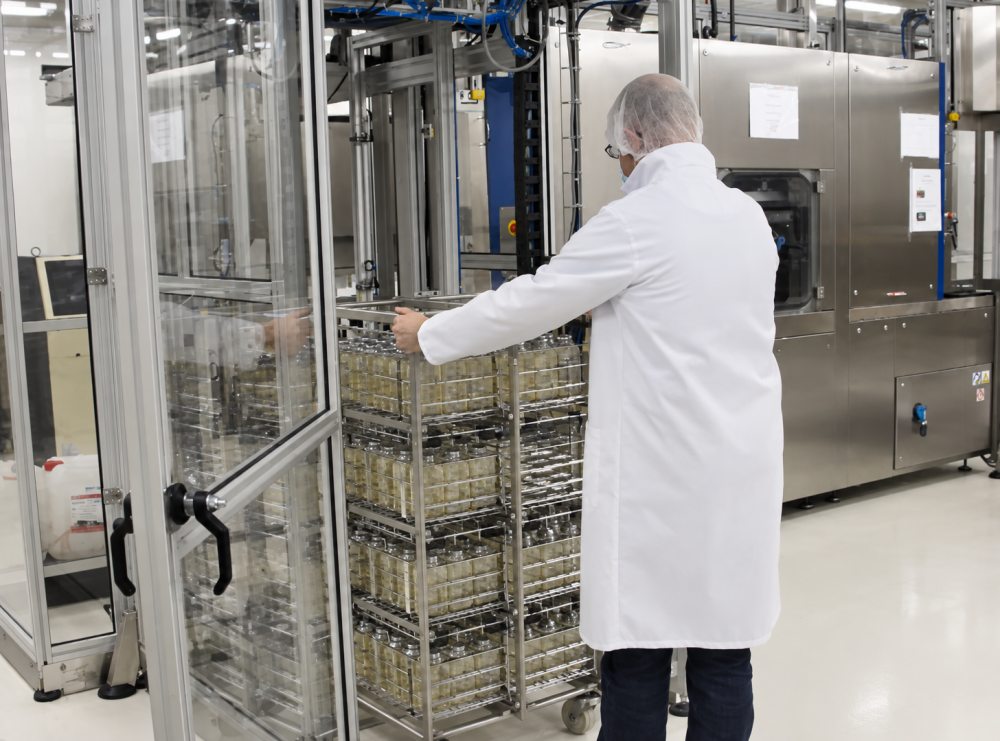
The greatest benefit of the new system is its significantly higher level of automation. While the loading and unloading of bottle crates previously required manual handling, the Poseidon system now manages the entire process, from receiving the loaded trolley to providing the cleaned and refilled bottles ready for unloading and immediate reuse.
Importantly, the key improvement is not an increase in throughput or shorter cycle times. Instead, the project has fundamentally changed the way the daily workload is managed.
As the head of facility management emphasizes: “The core benefits for us are the significant reduction in workload for our team and the more consistent performance of the system. The new system has noticeably reduced the physical strain on employees, with less heavy lifting and more ergonomic working heights. The feedback from our employees has been correspondingly positive.”
For the research facility, the project’s success is therefore not measured solely by technical performance indicators, but also by how the new system makes daily work easier, more consistent, and less physically demanding for the people who work with it every day.
Building a Future-Ready Solution Together
This project demonstrates how an existing infrastructure can be transformed into a modern, future-ready process through the strategic use of automation and robotics. At the same time, it underlines that successful automation projects rely on more than technology alone. The close collaboration between the research facility, Tecniplast, and all project stakeholders was a key success factor in developing a sustainable solution that met complex operational requirements while delivering long-term value.
Automation is not about replacing people. It is about supporting them by reducing repetitive and physically demanding tasks, allowing them to focus on the activities where their expertise and experience create the greatest value.
- Edited By Irina Meyer-Calyh, Tecniplast Suisse




 Corporate
 Italia
 Australia/New Zealand
 France
 Germany
 Japan
 USA
 Canada
 UK
 China
 Switzerland